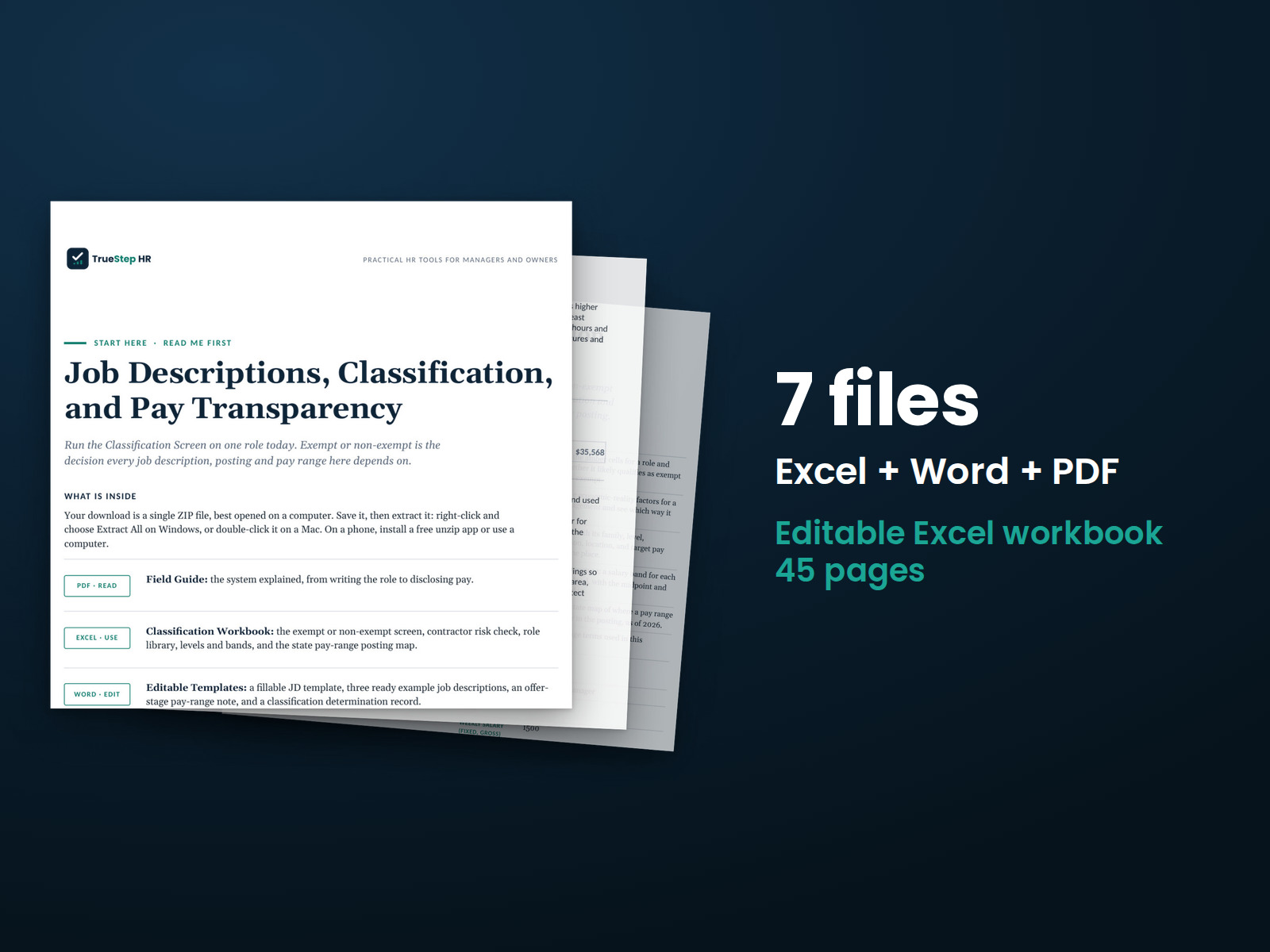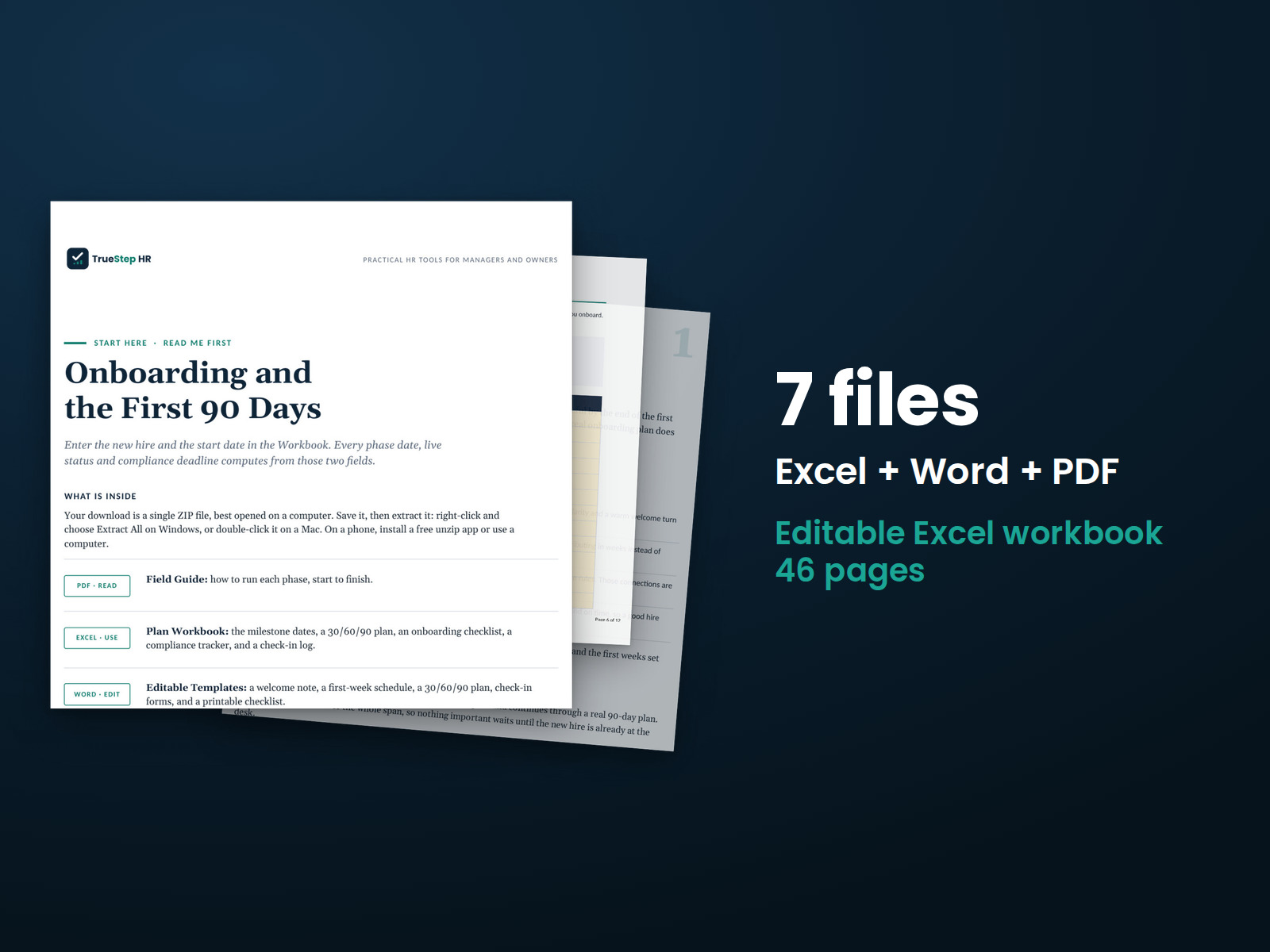
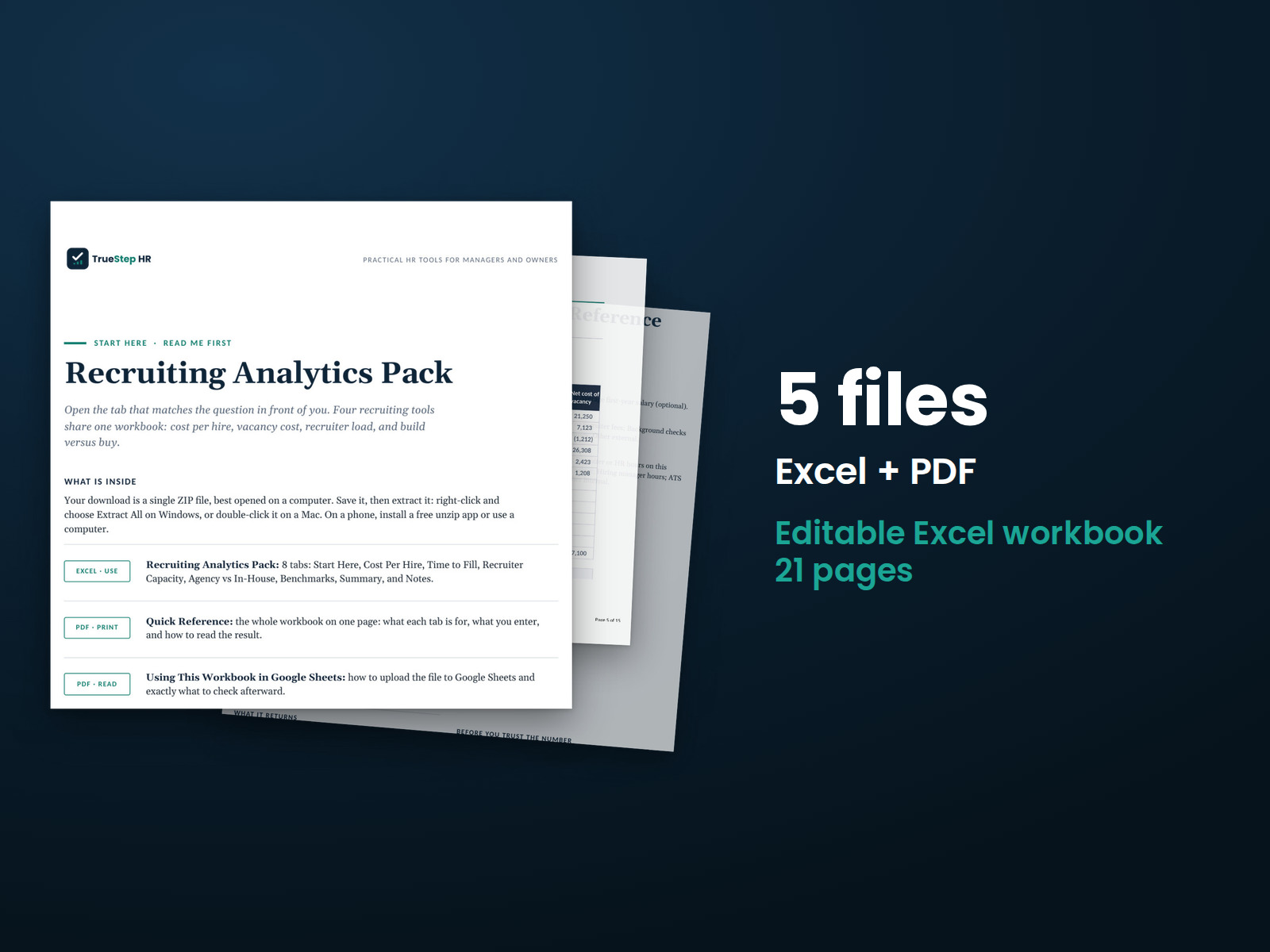
Hiring and onboarding

Candidate Ghosting Prevention Kit

Stop losing hires you already won. Score who is about to go quiet, send the right message at the right moment from scripts that are ready to go, and keep interviews, manager feedback, and offers moving on a schedule. Built for the manager, owner, or HR team of one who keeps finding out a candidate is gone only after the silence.

$49USD

One-time purchase, no subscription. Instant download.

Built by expert HR practitioners and leaders

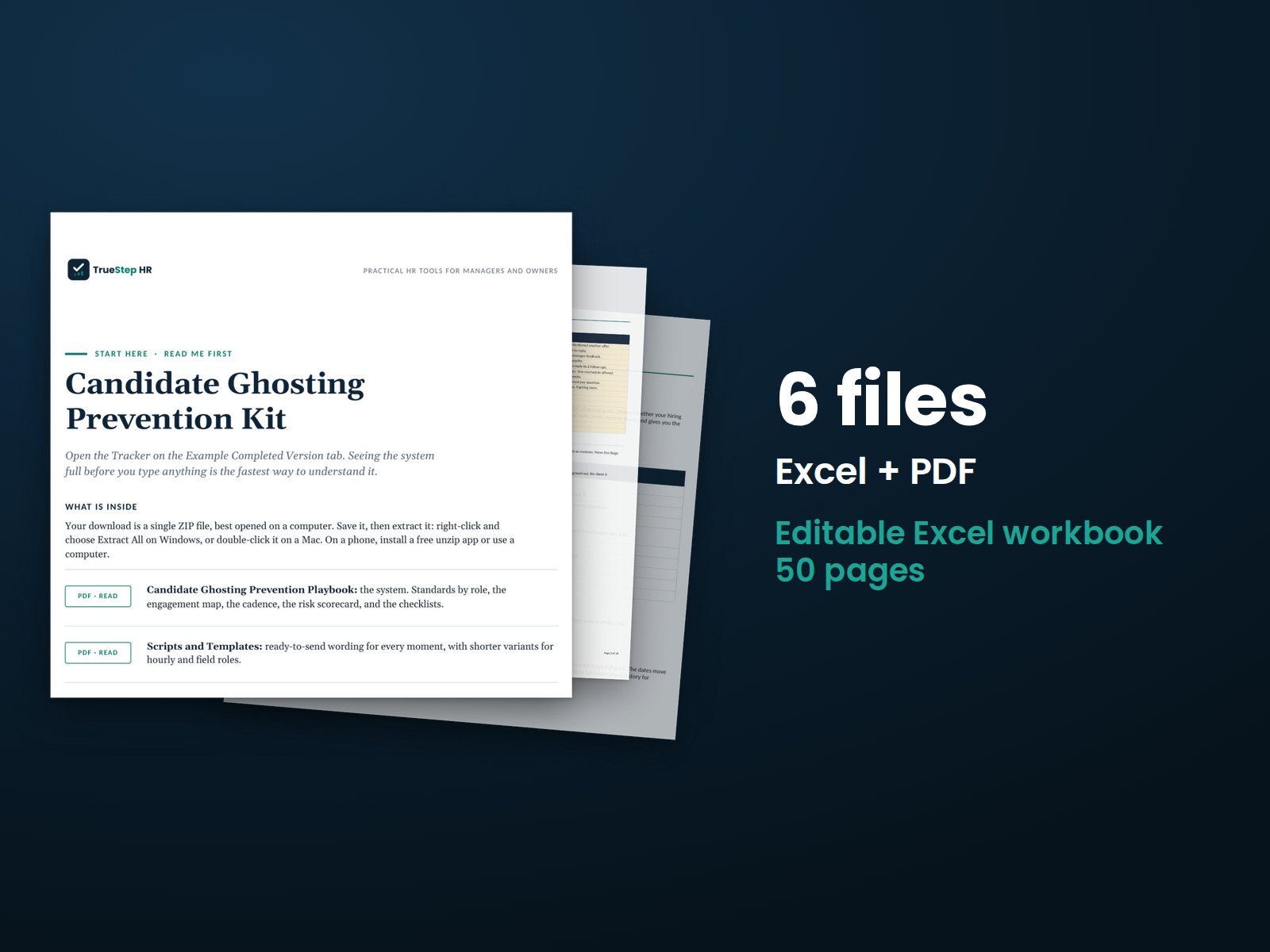
  • The Candidate Ghosting Prevention Playbook (18 pages): how ghosting works and where you lose candidates, communication standards tuned by role, the engagement map of what keeps and what loses people at every stage, the follow-up cadence, manager accountability, and a short forensics for the ones who still vanish
  • Scripts and Templates, ready to send: wording for every cadence moment, from the application reply through invites, confirmations, day-before reminders, updates, re-engagement after silence, offer follow-ups, and a kind close, with shorter text-first variants for hourly and field roles
  • A Ghosting Risk Scorecard that flags the drift early: rate each candidate on seven signals from dropdowns, and the workbook returns a score, a risk level, and the recommended action, so your attention goes to whoever is closest to going quiet
  • A pipeline and three working trackers: one row per candidate with an automatic days-since counter, plus interview reminders, a hiring manager SLA tracker with an escalation flag, and an offer follow-up tracker, so nothing sits unanswered
  • A dashboard, a worked example, and plain-language definitions: the workbook ships pre-filled with a fictional company already scored and tracked, so nothing starts as a blank page, and the dashboard shows at-risk counts, no-show rate, manager speed, and offers waiting

The kit gives you the schedule, the words, and the early warning. It does not replace your job board or applicant system; it sits next to them and runs the follow-up discipline most small teams are missing.

One-time purchase Instant download Editable files 14-day guarantee

A playbook, send-ready scripts, and a tracking workbook for candidate communication, and practical business and HR guidance, not legal or tax advice. Treat every candidate consistently and fairly; if you text candidates at volume through a service, confirm consent and opt-out handling with the provider and qualified help; and hiring rules vary by location and change over time, so adapt the wording, timing, and process to your roles and your local rules.

Not the right fit? Take the 60-second match.

Last reviewed June 2026

Buying for clients or multiple entities? The White-Label tier is in the license.

One-time purchaseNo subscription
Instant downloadFiles you keep
Editable filesExcel, Word, PDF
14-day guaranteeMoney back
Secure checkoutSSL encrypted
What you get

Four files that run the whole system

Read the Playbook once for the why and the schedule, then run the system: keep the pipeline current, send from the scripts at each cadence moment, and let the dashboard tell you who needs action today. Each file stands on its own, so start where the silence hurts most.

PDFStart here

Start Here

A one-page map: open the worked example to see the system running, replace the sample rows with your real candidates, send the matching script to the one or two people the dashboard flags, and set a standing ten-minute slot once or twice a week to update the tracker and clear the flags. It also sets the pace rule the kit runs on: same-day responses for hourly and field roles, a clear and honored timeline for salaried ones.

PDFRead first

The Candidate Ghosting Prevention Playbook (18 pages)

The system in fifteen short sections: how ghosting works and where you lose, communication standards by role type, the candidate engagement map, the follow-up cadence, the risk scorecard, hiring manager accountability, what to fix before you post the job, speed and prevention checklists, common candidate experience mistakes, a short forensics for when someone ghosts, spotting a competing offer, wiring the tracker to the tools you already use, keeping a new hire from the yes to day one, and a one-person version of the whole thing.

PDFSend-ready

Scripts and Templates (7 pages)

Wording for every moment in the cadence: application received, the fast reach-out to a strong applicant, interview invites and confirmations, day-before reminders, the post-interview thank-you, next-step and delay updates, keep-warm check-ins, re-engagement after silence, no-show recovery, offer follow-ups, the welcome through day one, and the kind close. Salaried and hourly-and-field variants where the tone should differ, bracketed fields to fill, and two nudges that keep a busy hiring manager moving.

XLSXExcel

The Candidate Ghosting Prevention Tracker

Your running system: a candidate pipeline with an automatic days-since counter, the risk scorecard, interview reminder and offer follow-up trackers, a hiring manager SLA tracker with due dates and an escalation flag, a message templates tab, a dashboard, and plain-language definitions. It ships pre-filled with a fictional company to study and clear, and it works in Excel or Google Sheets.

How it works

The method in the order the system runs

Set your pace, load your candidates, send on schedule, score the drift, and keep the managers moving. The kit gives you the timing, the words, and the early warning; you send the messages, and the tracker makes sure none of them gets forgotten.

STEP 01

Read the Playbook and set your pace

Start with the standards by role. The kit’s working defaults: respond the same day for hourly and field roles, within one to two business days for salaried ones, and treat the day-before reminder as non-negotiable. They are practical starting points to tune, and once you pick yours, the whole system runs on them.

STEP 02

Load your candidates into the Pipeline

Export applicants from the job boards you already use, or type them in, one row per candidate. Enter the stage and the last contact date, and the days-since counter starts running on its own. The Playbook’s wiring section covers the weekly export habit that keeps the list current in minutes.

STEP 03

Send from the scripts at every cadence moment

The cadence names twelve moments, from application received to the kind close, and the Scripts and Templates document has the wording for each one, with shorter text-first variants for hourly and field roles. Fill the bracketed parts, send, and log the contact, so the counter resets.

STEP 04

Score anyone who starts to drift

When a candidate slows down, score them: seven dropdowns, from days since contact to a competing offer, and the workbook returns a risk level and the recommended action. High means reach out today and confirm the timeline; Critical means call. The score turns a vague worry into a move.

STEP 05

Watch the dashboard and keep the managers moving

The dashboard shows who needs action today, the no-show rate, and which offers are waiting. The SLA tracker runs the other half: due dates on every resume review, feedback, and offer decision, with an escalation flag and a ready-made nudge when a manager sits past the target.

The standard

Silence loses hires you already won

Most ghosting is not a mystery. A candidate applies and hears nothing for days, so they keep applying elsewhere. An interview gets booked but never confirmed or reminded, so it quietly becomes a no-show. Feedback sits with a hiring manager for a week, so the candidate decides silence means no and stops answering. An offer goes out and nobody follows up, so a faster company wins. The fix is not charm. It is answering fast, confirming everything, and following up on a schedule, with an early warning the moment someone starts to drift.

Candidate communication fails in predictable ways: the first reply comes days late, the interview is never confirmed, the manager sits on feedback while the candidate decides silence means no, and the offer expires because everyone assumed someone else was following up. A pipeline with a days-since counter, scripts ready to send, a risk score that flags the drift, and a manager SLA with an escalation nudge turn follow-up from a memory test into a system. That is what this kit sets up.
Speed is a system, not a personality trait. The kit’s standards are concrete working defaults: same-day responses for hourly and field roles, one to two business days for salaried ones, and a day-before reminder on every interview, which the kit treats as the single biggest lever on no-shows. They are the kit’s own practical starting points to tune to your roles, and the cadence makes them automatic instead of aspirational.
The manager is half the problem, so the kit tracks the manager. Candidates rarely ghost a process that is visibly moving; they ghost the one that went quiet on them first. The SLA tracker puts a due date on every resume review, every round of feedback, and every offer decision, counts the days pending, and raises an escalation flag, with a ready-made nudge that keeps it routine rather than personal.
Every candidate gets the same system, including the ones you pass on. The scorecard and cadence run consistently and fairly across candidates rather than by gut feel, and the loop closes with a kind, brief no within two business days of the decision. The people you pass on talk to others, leave reviews, and sometimes reapply for a better-fit role, so the last impression is part of the system too.
Is this for you

Who it is built for

Who this kit fits, and where to go if your need is something else.

Built for

  • An owner or manager in a small business hiring hourly and field roles, where the fastest, clearest reply usually wins the candidate, and where a missed reminder turns into an empty interview slot on a busy day.
  • An HR leader or HR team of one running several openings across hiring managers, who needs the follow-ups, the feedback, and the offers visible in one place, with a polite way to chase the manager who is sitting on a decision.
  • A manager with an offer out right now who wants it answered rather than expiring in silence, and a repeatable way to keep the next candidate engaged from the first reply to the first day.

If you are looking for

  • Too few applicants at the top of the funnel, rather than applicants going quiet. That is a sourcing problem, and the Employee Referral Program Kit works it at the most reliable source a small team has.
  • New hires who accept and then struggle or leave in the first few months. The handoff this kit ends with is where the New Hire Onboarding 30-60-90 Kit begins.
  • Current employees going quiet, not candidates. Disengagement before a resignation is a retention problem, and the Retention and Stay Interview Action Kit is built for exactly that conversation.
Questions

Before you buy

What format are the files and can I edit them?
The Start Here, the 18-page Playbook, and the Scripts and Templates are print-ready PDFs with the scripts written to copy, fill, and send from your own email or phone, and the Tracker is an Excel workbook that also works in Google Sheets. The workbook ships pre-filled with a fictional company you study and clear before adding your own candidates, and a message templates tab keeps the wording one tab away while you work.
Is this legal advice?
No. It is practical business and HR guidance and general information for the everyday work of candidate communication. The kit is plain about the touchpoints that need care: treat every candidate consistently and fairly, and if you text candidates at volume through a service, confirm consent and opt-out handling with the provider and qualified help first. Hiring rules vary by location and change over time, so adapt the wording, timing, and process to your roles and your local rules.
Does it connect to my job board or applicant system?
There is no integration to set up, and that is deliberate: the kit works no matter where your applicants come from. Most job boards let you export applicants to a spreadsheet, and the Playbook’s wiring section turns that into a weekly habit: export, paste the new names into the Pipeline, and the counters and dashboard take over. If you only hire a few times a year, typing candidates in by hand takes minutes.
My hiring managers are the slow ones. Does this help?
That is half the system. The SLA tracker puts a due date on every resume review, every round of interview feedback, and every offer decision, using the kit’s defaults of one business day for reviews and feedback and two for an offer decision, tuned to your reality. It counts the days pending, flags what needs escalating, and the scripts include two ready-made manager nudges, a routine one and a firmer one for when a candidate is at real risk, so the chase stays professional rather than personal.
How is this different from a free follow-up email template?
A free template gives you wording for one moment; this is the whole system around the wording. The cadence tells you all twelve moments and when each one lands, the scorecard tells you who is drifting before they vanish, the pipeline and SLA tracker make sure no candidate and no manager sits unanswered, and the dashboard shows the no-show rate and the offers waiting. It also covers what a template never will: spotting a competing offer, recovering a no-show, and closing the loop kindly with the people you pass on.
What is the refund policy?
Digital products are covered by a 14-day money-back guarantee. See the refund policy for the full terms.
What happens after I buy?
Checkout delivers an instant download link, and a receipt with the same link arrives by email. Open the Start Here page first; it points you to the worked example before you type anything. If a file gives you trouble, email support@truestephr.com.
Can I expense this purchase to my business?

Most customers buy TrueStep HR tools for business use, and a tool you use for work often qualifies as a deductible business expense. Whether it does for you depends on your situation, so confirm with your accountant or tax professional. Your receipt arrives by email at checkout and works as documentation.

Free guide

The 6 red flags to check before you discipline or fire someone

A five-minute screen that catches the most common and most expensive people-decision mistakes before they happen. Free PDF, sent to your inbox. Unsubscribe anytime.

Get the kit

Stop losing hires you already won

Answer fast, confirm everything, and follow up on a schedule, with a risk score that flags who is drifting, a tracker that keeps managers moving, and send-ready scripts for every moment from the first reply to the kind close.

$49
One-time purchase, no subscription

A candidate communication system and editable trackers, not legal or tax advice. Last reviewed June 2026.