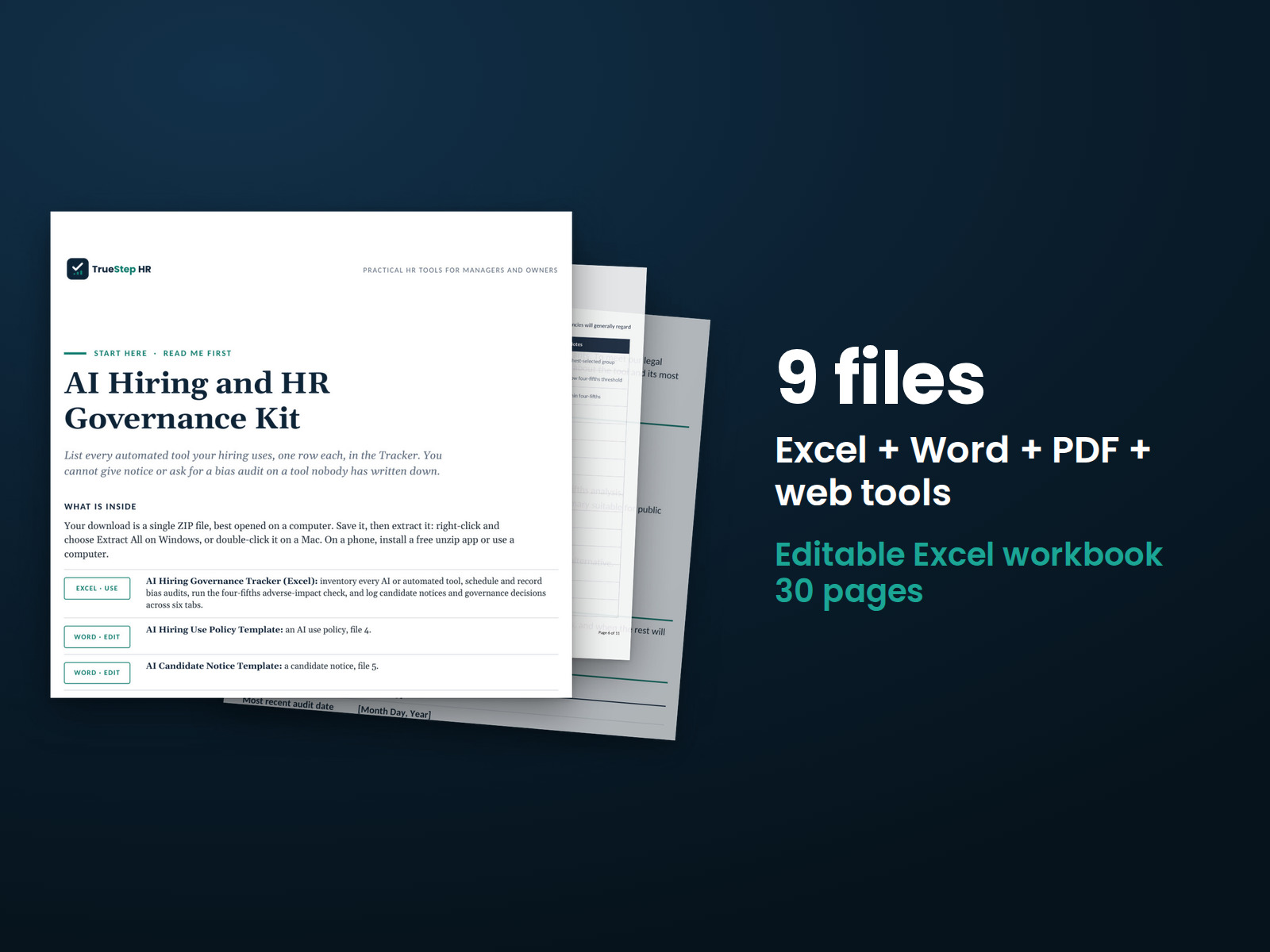
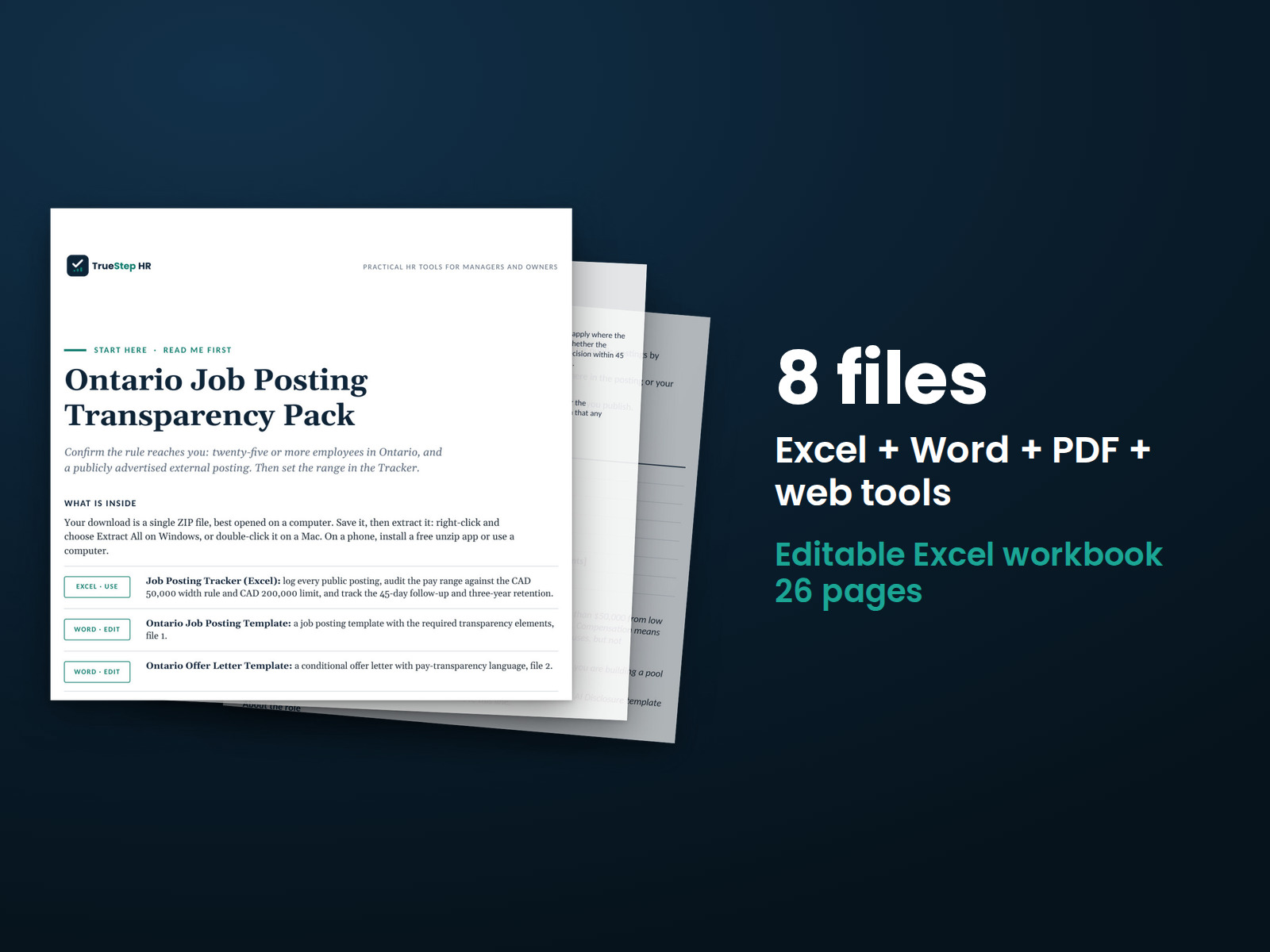
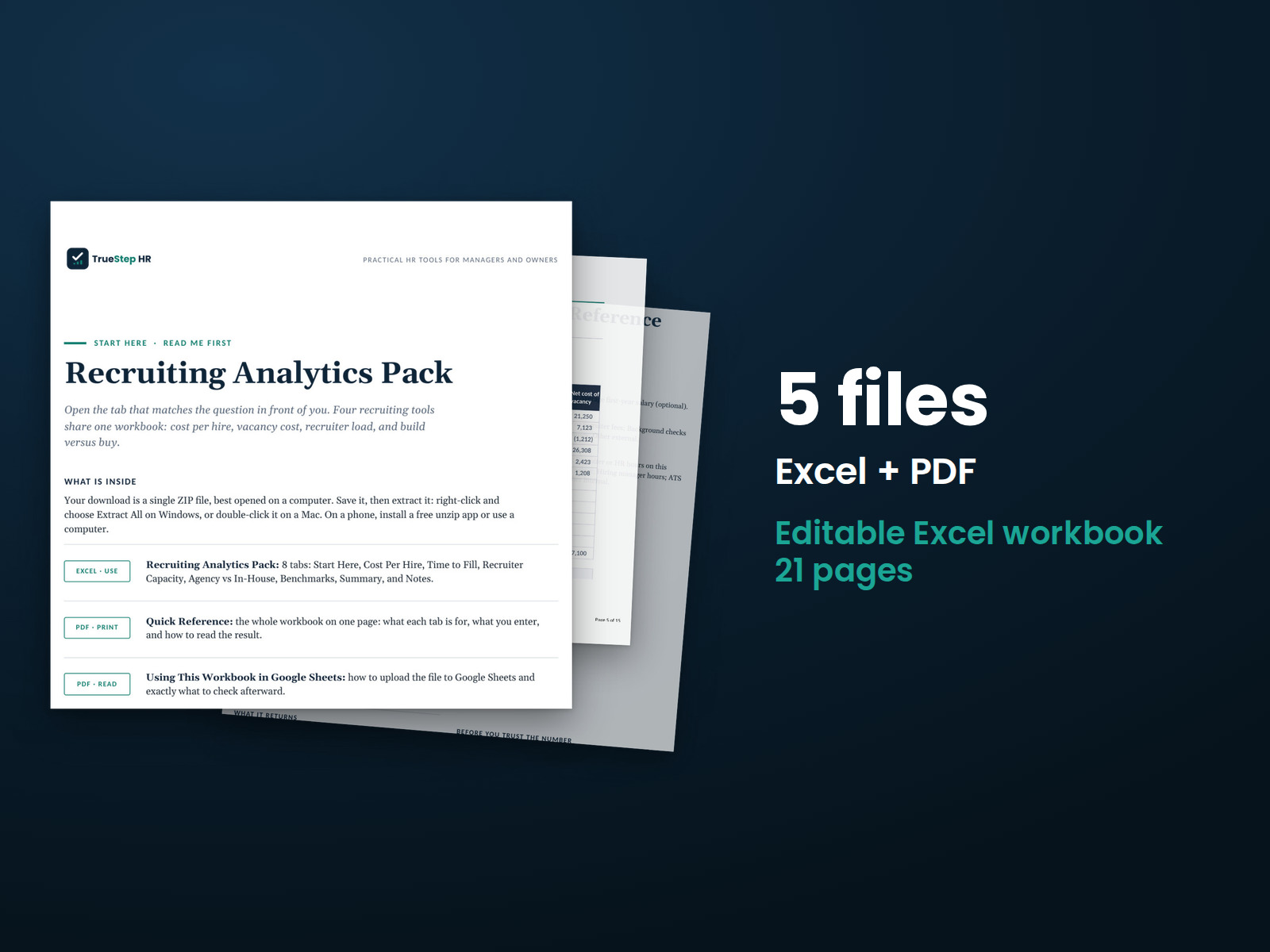
Real screenshots from the kit files. Example figures are illustrative.
AI Hiring and HR Governance Kit
Put working governance around the AI in your hiring: a policy you adopt, notices candidates get before a tool runs, vendors held to their audit results, and the four-fifths check run on your own numbers.
One-time purchase, no subscription. Instant download.
Built by expert HR practitioners and leaders
- AI hiring use policy: twelve adoptable sections covering scope, human oversight, bias testing, notice, records, vendors, and prohibited uses
- Five candidate notices: copy-ready Options A to E, from a one-line statement to the 10-business-day advance notice and the video-interview consent
- Vendor bias-audit request: a ready-to-send letter with the ten-item ask and a response grid for the vendor to complete
- Adverse-impact review memo: documents the four-fifths review, the findings, and the action taken, with the table built in
- Six-tab governance tracker: tool inventory, the bias-audit schedule, the four-fifths log, the candidate notice log with the business-day count, and a governance record
- Web assessment and Start Here guide: check your hiring against the rules and see which obligations each location triggers
The kit organizes the governance and keeps the record. It does not determine that a tool complies and does not replace counsel review.
Templates, a tracker, and general business information for planning, not legal or tax advice. The rules for AI in hiring vary by place and change quickly, so confirm edge cases with employment counsel.
Not the right fit? Take the 60-second match.
Last reviewed June 2026
Buying for clients or multiple entities? The White-Label tier is in the license.
Seven pieces that put governance around every tool
A policy you adopt, notices you paste in, a letter that holds vendors to account, a memo that documents the math, and a tracker that keeps the whole record. Built to be used together.
Start Here
What each piece does, the order to use them, and the rules the kit tracks in plain language. One page, read it first.
AI in Hiring Use Policy
A twelve-section internal policy you adapt and adopt: scope and definitions, principles, the tool inventory, human oversight, bias and adverse-impact testing, candidate notice, records, vendor management, roles, prohibited uses, and the review schedule. A plain definitions table settles what counts as a covered tool.
AI Candidate Notice
Five copy-ready notices, Options A to E: a one-line statement, wording that names what the tool assesses and offers an alternative, a human-review version, the video-interview notice and consent, and the advance notice with the 10-business-day lead time. Each carries accommodation contact language.
Vendor Bias-Audit Request
A ready-to-send letter asking each vendor for its most recent bias-audit results, methodology, data categories, selection rates and impact ratios, known limitations, and how it supports notice and accommodation, with a response grid for the vendor to complete and a reply-by date.
Adverse-Impact Review Memo
An internal memo that documents a four-fifths review of a tool or hiring round: the selection-rate table, the findings, the action taken, and a sign-off line. A flagged result is framed as a screen for a closer look, not a verdict.
Governance Tracker
Six tabs: a Start Here, the AI tool inventory, the bias-audit tracker with the next-audit date calculated, the adverse impact log that runs the four-fifths math, the candidate notice log with the business-day count, and a governance log for approvals and reviews. Opens on a worked example. Works in Excel or Google Sheets.
Governance Assessment
Check your hiring against the bias-audit, notice, and human-oversight rules in any browser, and see which obligations each of your locations triggers. Its result is a self-assessment, not a compliance determination.
The method in the order governance runs
Scope first, policy second, then the checks and the record. The kit structures and documents; counsel makes the close calls.
Confirm what you use and where
List every tool that screens, scores, ranks, or assesses candidates, and check which places apply: New York City, Illinois, California, Colorado, the EU, plus federal law everywhere. The Start Here and the assessment walk through it.
Inventory the tools, adopt the policy
One row per tool in the tracker, an owner named for each, and the use policy adapted and adopted, setting the oversight, notice, and recordkeeping rules your team follows.
Run the checks
Run the four-fifths check on your own selection data, send each vendor the bias-audit request, and give candidates the right notice before a tool is used.
Log it and review on a schedule
Record audits, notices, approvals, and decisions in the tracker. Review at least yearly and whenever a law changes or a tool is added, and take the edge cases to counsel.
One structure for a patchwork of rules, honest about its limits
There is no single law for AI in hiring, so the kit names the rules it tracks, dates its review, and is clear about where counsel takes over.
The kit tells you when to call a lawyer
AI hiring rules look mechanical until a case sits near a line. The checkpoints below are marked in the templates and the tracker, so you slow down before a tool, or a decision about one, creates exposure. Advice early is far cheaper than a charge later.
Who does what
Working governance splits the load between you, the kit, and your counsel. Here is the split, stated plainly.
- The kit drafts the policy; you adopt it. The twelve sections carry the standards and the coaching notes. The owners, the review dates, and the final wording are your calls, with counsel on the last read.
- The kit words the notices; you give them. Five options cover the normal cases. Placing the right one where candidates see it, before the tool runs, is the part only you can do.
- The tracker runs the four-fifths math; counsel reads a failing ratio. The log calculates the rates and flags anything below 0.80. A flag is a screen for a closer look, and what happens next is a legal call.
- The letter asks the vendor; your contract holds them to it. The request gets the audit results, methodology, and limitations on file. The contract terms that bind the vendor are counsel territory.
- The kit keeps the record, and the record is the point. An inventory, dated audits, logged notices, and documented decisions are the difference between a clean answer and a scramble when someone asks.
Who it's built for
Who this kit fits, and where to go if that's not you.
Built for
- An HR team running resume rankers, automated scoring, chatbot screeners, or AI video analysis, with no governance structure around them yet.
- A company hiring into New York City, Illinois, California, or Colorado, or employing in the EU, that needs the notice, audit, and oversight rules handled in one place.
- A team that has to answer a board, customer, or counsel question about how its AI hiring is governed, and needs the policy and the paper trail to show for it.
If you are looking for
- One AI policy for all of HR, not a hiring governance system. The AI in HR Policy and Risk Checklist covers AI use across the function.
- EU AI Act readiness on its own. The EU HR AI Risk Checklist maps the Act's employment obligations and timelines.
Before you buy
What format are the files and can I edit them?
Is this legal advice?
Which rules does the kit track?
What counts as an AI or automated tool here?
What is the four-fifths rule?
We only use one resume-screening tool. Do we still need this?
Does it cover the New York City notice timing?
Colorado and the EU rules are not in force yet. Why set up now?
What is the refund policy?
What happens after I buy?
The 6 red flags to check before you discipline or fire someone
A five-minute screen that catches the most common and most expensive people-decision mistakes before they happen. Free PDF, sent to your inbox. Unsubscribe anytime.
Govern the tools before someone asks
The policy adopted, the notices out, the vendor audits on file, and the four-fifths check run, all in one documented record.
Templates and self-review tools for planning, not legal or tax advice. Last reviewed June 2026.