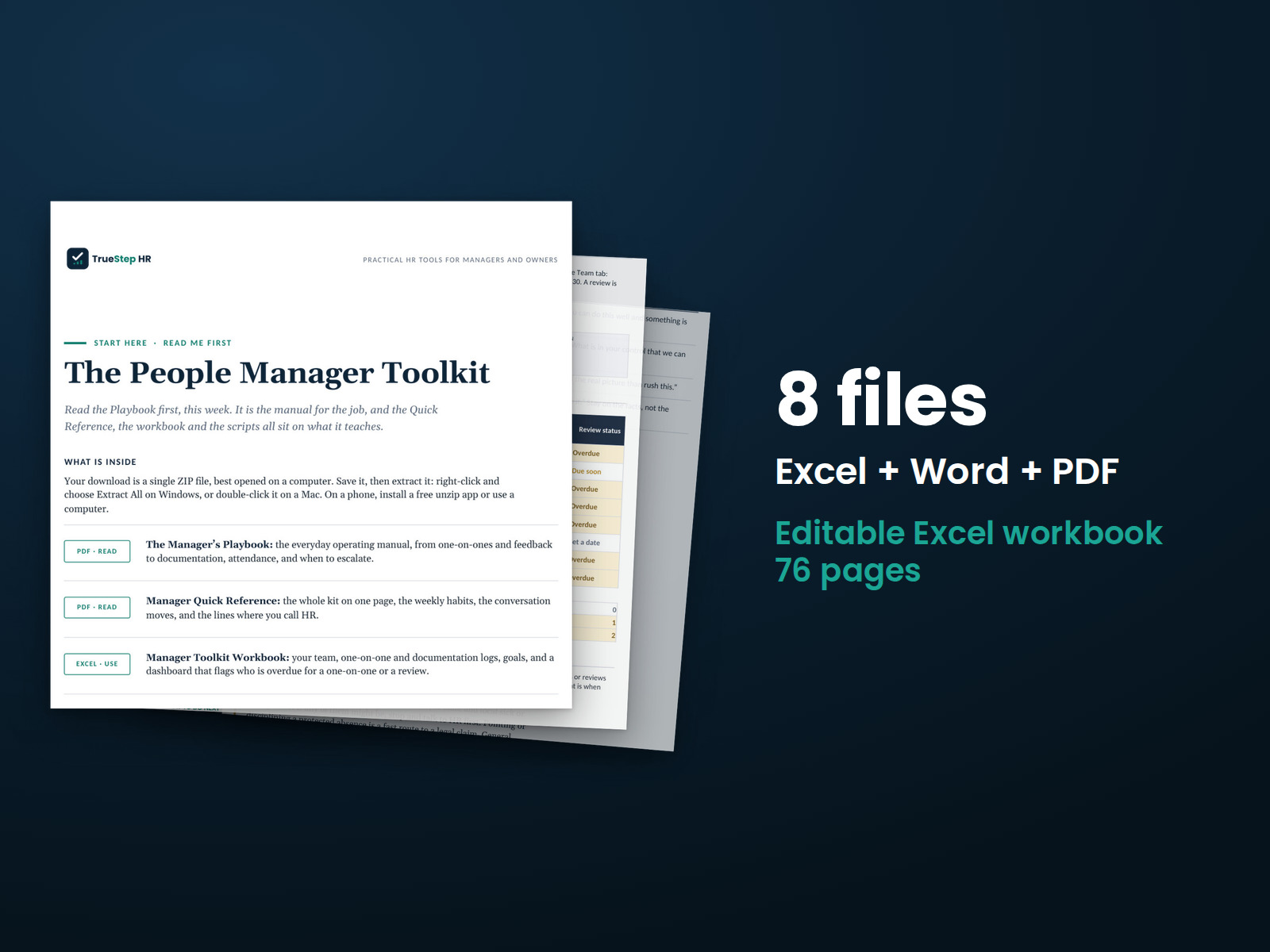
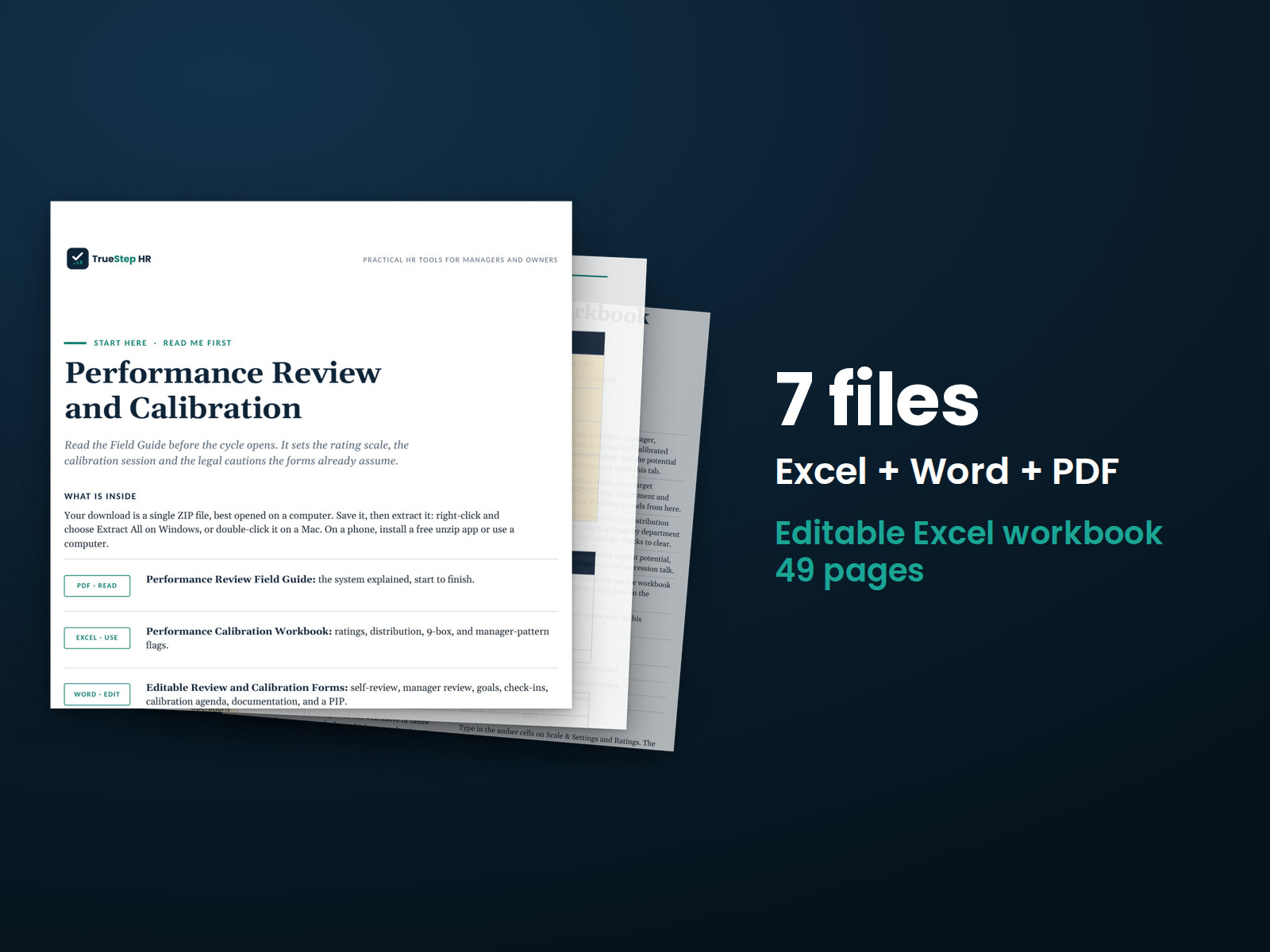
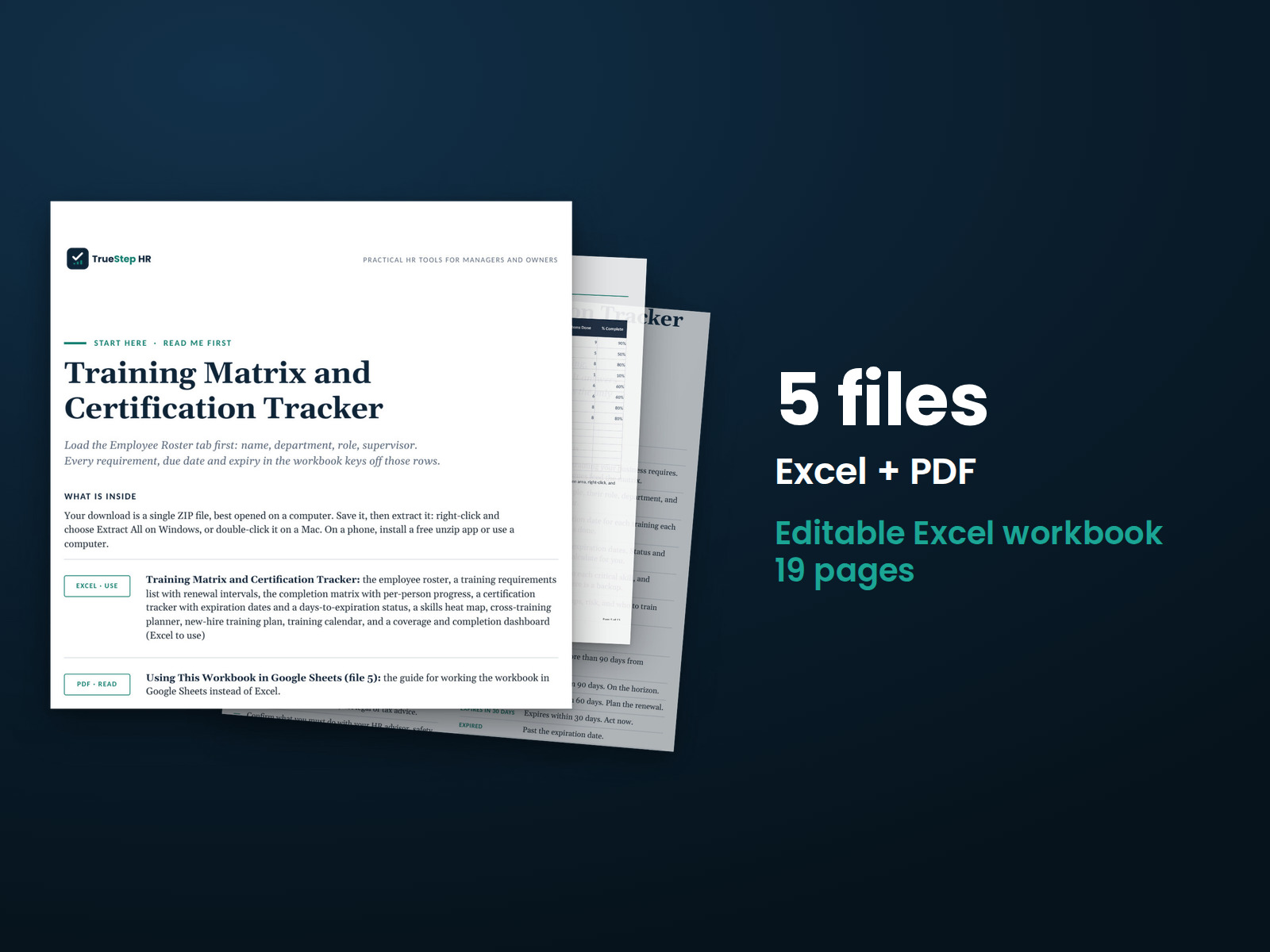
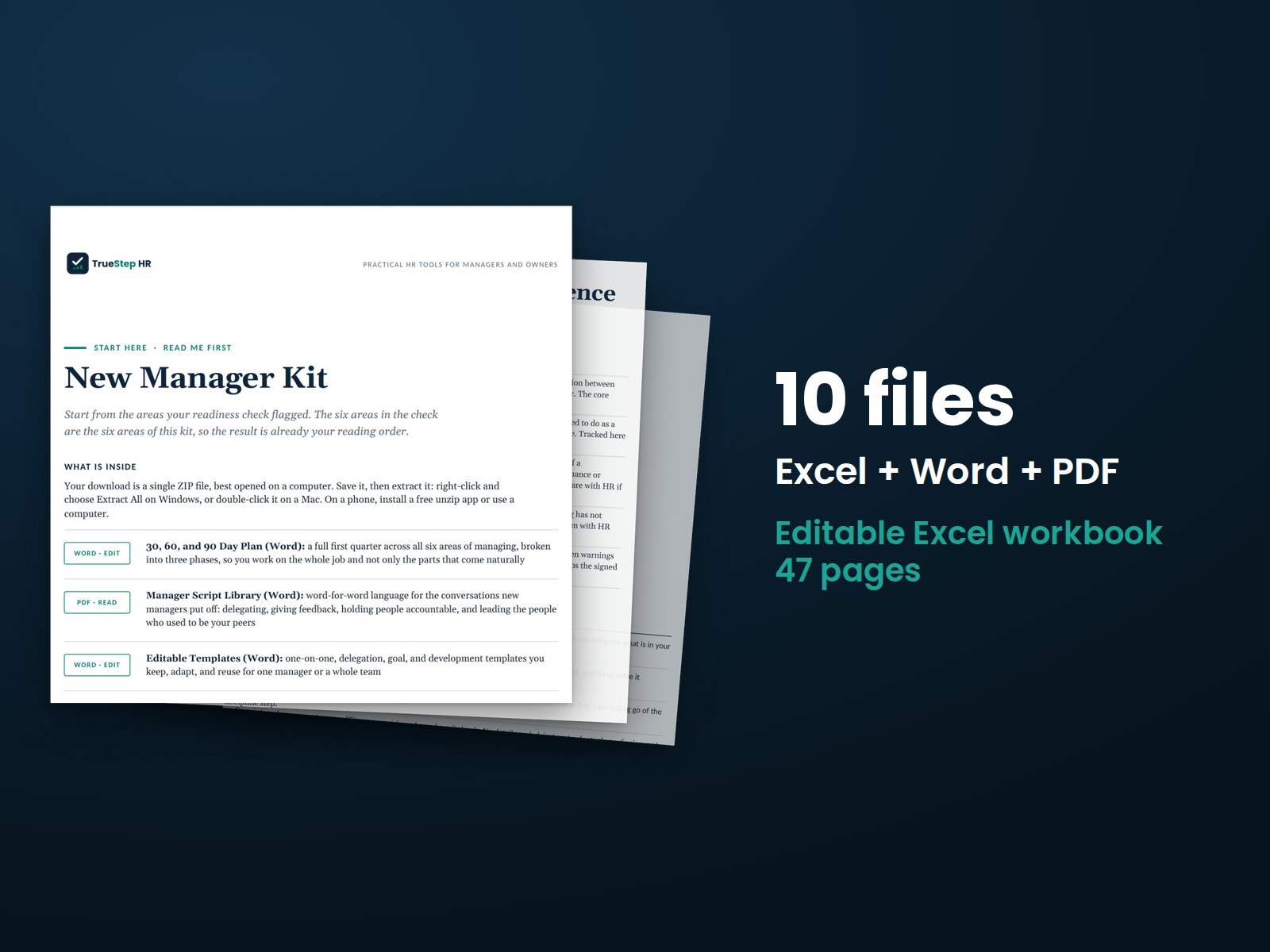
Real pages and tabs from the kit files. Example names and details are illustrative.
People Manager Toolkit
Run your team with a real system instead of instinct. The everyday manager moves done well, one-on-ones that are worth the time, feedback that lands, documentation that protects everyone, and a dashboard that tells you who you have not spoken to and who is overdue for a review, with word-for-word scripts for the conversations managers put off. Built for the person who was promoted for the work and now has to manage the people.
One-time purchase, no subscription. Instant download.
Built by expert HR practitioners and leaders
- The Manager’s Playbook: the everyday operating manual in twelve short sections, what a manager owns, one-on-ones, feedback and coaching, recognition, documentation, attendance, the steps before a formal plan, the conversations managers avoid, wage-and-hour basics, and the lines where you call HR
- Manager Scripts and Templates: word-for-word openings for the hard conversations, the late-again talk, the performance gap, the request you have to decline, plus reusable one-on-one, feedback, and documentation templates you edit in Word
- A Workbook with a Dashboard that flags who is overdue: list your team once, log each one-on-one and note as you go, and let the dashboard tell you who you have not spoken to, whose review has slipped, and who needs attention
- A One-on-One Log, a Documentation Log, and a Development and Goals tracker: the place the work lives, every conversation and commitment, every dated factual note, and every goal with a status, in one workbook you keep all year
- A Manager Quick Reference: the whole kit on one page, the five habits to run each week, the conversation moves, and the lines you do not cross, made to print and keep where you will see it
The toolkit gives you the manual, the words, and the system to run the team. It does not make the calls that belong with HR or counsel, and it tells you plainly where those lines are.
A playbook, scripts, and a workbook for running a team, and practical business and HR guidance, not legal or tax advice. Anything involving harassment, discrimination, a possible medical or leave issue, or a step toward termination should go to qualified HR or legal counsel, and the toolkit should be adapted to your company policy, your contracts, and the law in the employee’s state.
Not the right fit? Take the 60-second match.
Last reviewed June 2026
Buying for clients or multiple entities? The White-Label tier is in the license.
Five pieces in the order to use them
Not a pile of templates. Read the Playbook first so you understand the job, print the Quick Reference and keep it in view, set up the Workbook so the dashboard can flag what is overdue, and open the Scripts when a hard conversation comes. Each piece stands on its own, so start where your need is today.
Start Here
A one-page map: read the Playbook first, print the Quick Reference, set up the Workbook, and open the Scripts when a hard conversation comes. It sets out the order to use the kit so you get value from it this week, and it states the scope, the practical work is yours, and the sensitive matters go to HR or counsel.
The Manager’s Playbook (18 pages)
The operating manual for the job in twelve sections: what a manager owns, setting expectations, one-on-ones, feedback and coaching, recognition, documentation, attendance and the no-show, the steps before a formal plan, the conversations managers avoid, pay and promotion and bad news, wage-and-hour basics for hourly staff, retaliation and at-will landmines, and when to stop and call HR, legal, or payroll.
Manager Scripts and Templates
Word-for-word openings for the conversations managers put off, the late-again talk, the performance gap, the request you have to decline, and the win worth naming, used almost as written. Plus reusable one-on-one, feedback, and documentation templates, so a clean record takes a minute rather than an afternoon.
The Manager Toolkit Workbook
Your Team roster, a One-on-One Log, a Documentation Log, a Development and Goals tracker, a Definitions tab, and a Dashboard that reads it all and flags who is overdue for a one-on-one or a review and who needs attention. It works in Excel or Google Sheets, with sample entries to follow and clear before you start.
The Manager Quick Reference
The whole kit on one page: the five habits to run each week, the conversation moves at a glance, and the lines where you call HR. Made to print and keep on your desk, so the system survives a busy week without your having to reopen the Playbook.
The method in the order a manager works
Understand the job, set the team up in the workbook, run the weekly habits, document as you go, and escalate the right things. The kit gives you the manual, the words, and the system; you run it, and HR or counsel takes the sensitive calls.
Read the Playbook and see what the job is now
Start with the Playbook. Your output is no longer what you produce; it is what your team produces, and whether they are set up to keep producing it. The Playbook covers what you own, how to run one-on-ones and give feedback, what to document, and the point on each where a situation goes to HR, so you manage on a method rather than instinct.
Set up the Workbook so the dashboard can do the watching
List your team once, with each person’s cadence and last review date. From then on the Dashboard reads the roster and your logs and tells you who is overdue for a one-on-one, whose review has slipped, and who needs attention, so you are not tracking it in your head or finding out at review time.
Run the weekly habits and log as you go
Hold the one-on-ones on the cadence you set, and log each one in a line: what you covered, what they raised, and the commitments with an owner and a date. Use the Quick Reference to keep the five weekly habits in view. The logging is what makes the dashboard work and what makes a clean record later cost a minute, not an afternoon.
Document the issues in dated factual notes
When an issue comes up, write a dated factual note in the Documentation Log at the time, and use the documentation template in Scripts so it reads as fact rather than opinion. Good notes protect the employee and you, and they are the difference between a fair process and a he-said dispute if a situation ever escalates.
Use the scripts for the hard ones and escalate the right things
When a hard conversation comes, open Scripts and use the one for the situation almost word for word. And know the lines: anything involving harassment, discrimination, a possible medical or leave issue, or a step toward termination goes to qualified HR or counsel, not a script. The kit tells you where those lines are.
Managing is a practice, not a personality
New managers are usually promoted for being good at the work, then left to figure out the people part alone, and it shows in dropped one-on-ones, feedback that never quite happens, performance issues raised too late, and no record when one matters. The fix is a small set of habits and a system that does the remembering. This kit gives you the manual, the words for the hard moments, and a workbook that flags what is slipping, so the team is run on a method that holds up on a busy week.
Who it is built for
Who this toolkit fits, and where to go if your need is something else.
Built for
- A first-time manager who was promoted for the work and now has to run the people, and wants a manual for the job rather than trial and error in front of their team.
- A busy or stretched manager who knows the one-on-ones and the documentation are slipping, and wants a system that flags what is overdue instead of relying on memory.
- An owner or team lead at a small company with no HR partner, who needs the everyday management moves done right and a clear line on what to take to outside HR or counsel.
If you are looking for
- Looking into a complaint, a conduct issue, or a possible investigation, rather than running the team. The Employee Relations and Workplace Investigations Kit is the right tool for that.
- Handling one leave request or an accommodation end to end, rather than day-to-day management. The Leave and Accommodation Kit is built for that.
- Putting a real employee handbook and the foundation policies in place, rather than the management toolkit. The Small Business HR Policy Starter Pack covers that.
Before you buy
What format are the files and can I edit them?
Is this legal advice?
I have never managed before. Is this too advanced?
How is this different from free management advice online?
What is the refund policy?
What happens after I buy?
Can I expense this purchase to my business?
Most customers buy TrueStep HR tools for business use, and a tool you use for work often qualifies as a deductible business expense. Whether it does for you depends on your situation, so confirm with your accountant or tax professional. Your receipt arrives by email at checkout and works as documentation.
The 6 red flags to check before you discipline or fire someone
A five-minute screen that catches the most common and most expensive people-decision mistakes before they happen. Free PDF, sent to your inbox. Unsubscribe anytime.
Run your team on a system, not instinct
Read the playbook, set up the workbook so the dashboard flags what is overdue, run the weekly habits, document as you go, and use the scripts for the hard conversations, with the kit telling you plainly where HR takes over.
A management toolkit and editable templates, not legal or tax advice. Last reviewed June 2026.